Best Roofing Services Moncton
You need Moncton roofing professionals who design for freeze-thaw, Petitcodiac winds, and severe weather. Look for CSA‑aligned installations: impact‑rated shingles, SBS‑modified ice/water shields with superior bonding strength, stainless or hot‑dipped galvanized flashings, Class H wind ratings, and corrosion‑proof fasteners. Demand calibrated ventilation, infrared/attic diagnostics, and image-tracked QA. Demand transparent, itemized estimates, manufacturer registration, and read more portable workmanship warranties. Teams must offer emergency tarp/steam de‑icing and upkeep programs that protect your warranty. Let's explore how to make the right choice.
Main Highlights
- Moncton-specific expertise: engineered for challenging climate factors, including temperature fluctuations, windstorms from the Petitcodiac, and ice dam formation, utilizing appropriate gradient specifications, superior ventilation systems, and weather-resistant materials.
- Utilizes SBS-modified membranes, rust-resistant fasteners and flashings, and high-grade H-class shingles engineered to withstand harsh coastal environments and strong winds.
- Detailed assessments featuring attic/roof inspections, infrared moisture mapping, ventilation testing, and manufacturer and CSA-compliant setup verification protocols.
- Quick disaster response: immediate protective covering and sealing measures, professional steam-based de-icing, detailed photo documentation for insurance, and organized repair sequences with specific time estimates.
- We provide full transparency with detailed pricing, regular maintenance schedules, photo records and complete warranty details including transferable workmanship and manufacturer warranties.
The Importance of Local Roofing Expertise in Moncton
Given that Moncton's unique microclimate takes a toll on roofs, area knowledge plays a crucial role in installation planning, materials used, and guarantee effectiveness. It's crucial to work with a contractor who understands freezing and thawing patterns, wind exposure along the Petitcodiac, and annual rainfall that leads to ice dam formation. Area experts specify appropriate slopes, underlayments, and ventilation to handle humidity levels and temperature-related expansion.
The team will choose assemblies proven for Moncton-impact-rated shingles, specially modified membranes, corrosion-resistant fasteners, and heavy-snow eaves protection-to satisfy area regulations while maintaining performance. Crews arrange installs around off-peak season conditions, using winter-grade adhesives and suitable torch restrictions for safety and adhesion.
Professional companies carefully adjust maintenance schedules and manufacturer documentation to preserve warranty coverage in this region. You benefit from minimal return visits, consistent operating costs, and validated compliance from day one.
Key Indicators Your Roof Needs Repair or Replacement
Consider continuous moisture problems as a major warning sign, rather than a trivial issue, since water penetration compromises your home's essential materials. Upon discovering missing or curled shingles, it reveals inadequate waterproofing that exposes building components vulnerable to weather damage. Our team will evaluate the entire roof, measure the extent of problems, and recommend whether targeted repair or full replacement offers the best lifecycle value.
Ongoing Interior Water Leaks
Persistent indoor leaks often indicate underlying roofing problems instead of routine repair requirements. If you observe water damage to interior surfaces, window frames, or wall connections, you're typically encountering damaged roof layers, deteriorated flashing, or broken membranes—rather than simple surface water. Water infiltration during minor rainfall indicates routes that circumvent roofing materials and saturate sheathing and insulation.
It's important to log and document the location, timing, and extent of leaks. We'll utilize advanced moisture detection methods to identify water pathways, examine roof vulnerabilities and problem areas, and analyze attic ventilation that can contribute to dampness and mold development. If not addressed, water intrusion will compromise structural elements and decrease insulation effectiveness, leading to higher energy expenses and potential structural failure. We'll offer customized repair or replacement strategies considering roof pitch, construction, and age, protecting interiors and finishes.
Curled and Missing Roof Shingles
Periodic examinations of the shingle field readily show potential issues: tabs missing from wind uplift, edges curling from heat cycling, or water-induced surface deformation. When shingles deteriorate or separate, you expose roofing components and structural elements to sunlight and precipitation. You'll also lose wind rating because structural integrity and attachment strength deteriorate.
Act quickly. Install new shingles where missing, secure loosened tabs, and fix improper ventilation that causes thermal cycling. Examine roof flashing at valleys, walls, and penetrations; damaged or corroded flashing speeds up shingle failure and creates leak paths. Check for granule loss near downspouts-exposed shingles age more rapidly and begin curling sooner.
When defects are widespread, a targeted repair won't be effective. A comprehensive approach using systematic roof replacement, improved underlayment, and reinforced edge metal to restore system performance and protection against wind damage.
Picking the Ideal Materials for Coastal Weather
As coastal weather systems drive corrosive sea air, freezing-thawing patterns, and intense rainfall across Greater Moncton, material selection becomes a performance decision, not a preference. Your roof requires materials that withstand coastal elements, wetness, and thermal cycling without premature failure. Select salt resistant shingles with reinforced mats, polymer-modified asphalt, and corrosion-proof fasteners to fight granule loss and coastal oxidation. Specify freeze thaw membranes designed for cold climate durability and maximum grip; they seal around nails and stop ice-dam backflow.
Opt for underlayments featuring superior moisture transmission over conditioned spaces and engineered products with superior tear resistance in open exposures. Opt for Class H wind certifications, stainless or hot-dipped galvanized flashing materials, and water-resistant ridge vents that repel driven rain. We can coordinate specifications, warranties, and lab testing to your location's microclimate.
Transparent Estimates and Honest Timelines
Smart material selection is only effective with clear project scope and timeline. You should expect upfront pricing that details labor, membranes, fasteners, flashing, disposal, permits, and contingencies. We calculate quantities from measured roof areas, slope, and detail counts, then secure pricing so you see exactly where every dollar goes. Zero hidden costs or unclear allowances.
We stand by realistic timelines. We meticulously sequence tear-off, substrate preparation, underlayment installation, roofing material placement, flashing installation, and weatherproofing elements with buffer days for weather. You'll receive a start date window, work crew timetables, critical path milestones, and a project finish estimate aligned with lead times. When circumstances shift, we immediately update you, helping you organize building access, vehicle logistics, and site access. Our precise planning maintains cost control, limits disturbance, and ensures on-time completion.
What Happens in a Professional Roof Inspection
When conducting your roof assessment, we start by evaluating the external components-including shingles, flashing, penetrations, gutters, and drainage-through photographic documentation and recording any wind damage, UV deterioration, or impact-related wear. We then proceed to inspect the attic to evaluate ventilation efficiency, insulation coverage, moisture levels, and airflow patterns that impact roofing durability and indoor air quality. You'll receive a detailed report with organized observations and suggested repairs.
External Condition Evaluation
Although each home is unique, an exterior condition assessment adheres to a proven sequence that demonstrates specifically what we're examining and why. We start with a complete exterior review to evaluate exterior appearance, visible defects, and safety concerns. Next, we examine roofing components and drainage systems for wind lift, UV degradation, fastener exposure, and sealant failure. We verify water runoff, look at overhangs for decay, and confirm proper edge metal installation.
We proceed to check gutters and downspouts for pitch, attachment, and discharge points, identifying marks that show drainage issues. Conducting moisture detection across the roofing, we connect weak points, surface damage, or material degradation with likely water travel paths. In conclusion, we document observations, prioritize repairs by risk and lifecycle impact, and present you with detailed solutions including scheduling and pricing.
Attic Ventilation Solutions
With the exterior documented, we move inside to check the roof system's behavior from the interior. We evaluate safety clearances, walkways, and access points, then examine the attic for traces of water intrusion, marks, mold formation, and light leaks. You'll watch as we measure air movement by means of diagnostic tools, checking air intake at soffits and outflow through ridge, gable, or mechanical vents.
We assess the depth, R‑value, and uniform coverage of attic insulation, identifying problems such as air leakage, compression points, and wind‑washing near penetrations, light fixtures, and access points. We scan for signs of moisture at nail points and delaminated sheathing, which indicate insufficient air circulation. Our thorough evaluation outlines critical corrections: air leak remediation, balanced ventilation systems, ventilation baffle placement, and enhanced ventilation solutions matched to local requirements. We detail recommendations for insulation upgrades and appropriate ventilation pathways for household ventilation systems to the exterior.
Warranty Coverage and Quality Standards
Quality standards define a roof's performance and longevity well before materials reach the site. Our process includes documented installation guidelines with engineered fastener layouts and industry-standard underlayments applied under controlled conditions. Our quality assurance process maintains strict oversight of surface readiness, flashing configuration, and waterproofing details, following rigorous checklists aligned with CSA and manufacturer specifications from initial preparation to final completion.
We thoroughly outline warranty details in clear terms. You get two levels of protection: a manufacturer material warranty and a portable workmanship warranty supported with audited job files and photo logs. We handle your system registration, maintain serials and lot numbers, and arrange post-install inspections to keep coverage valid. If a defect relates to installation, we correct it at no cost and manage claims administration on your behalf.
Emergency Roof Services and Storm Preparation
When extreme weather strikes Greater Moncton, you need a rapid and organized action plan that protects the roof and maintains the building envelope. You can expect quick action delivered by skilled crews who analyze load paths, locate intrusion points, and establish temporary controls quickly. We deploy tarp solutions rated for high wind uplift, seal penetrations, and secure flashing to halt active leaks. Our specialists document conditions, photograph damages, and manage emergency communications maintaining coordination with insurance providers and involved parties.
As freeze-thaw weather hits, we carry out ice mitigation procedures: steam de-icing at controlled temperatures, ensuring drain clearance, and implementing temporary heat tracing to reestablish flow without compromising membranes. In response to impact events, we carry out moisture mapping, material sampling, and careful debris clearance, then create a comprehensive repair strategy with detailed scheduling and pricing.
Essential Maintenance Plans for Longer Roof Life
Proactively managed maintenance plans extend service life, control lifecycle costs, and safeguard warranty validity. You get scheduled inspections designed for Moncton's freeze-thaw cycles, with periodic reviews that assess current status, identify critical fixes, and verify drainage performance. Qualified staff complete gutter cleaning, caulking updates, connector adjustment, and selective component replacement to address minor issues before they cause leaks.
We streamline processes: roofing system assessment, condition assessment report, and a service schedule by system configuration, pitch, and environmental factors. You'll get photographic records, humidity measurements, and a corrective action list with cost estimates and schedules. Snow-load monitoring, penetration flashing audits, and waste removal procedures maintain water flow and minimize heat escape. With ongoing upkeep, you optimize thermal efficiency, prevent urgent repairs, and extend roofing system longevity.
How to Evaluate and Compare Roofing Contractors
A well-executed maintenance plan only delivers results if the contractor has the systems and competency to carry it out. You should evaluate firms using objective standards. First verify licensed verification, WSIB coverage, and $2M+ liability insurance; obtain certificates directly from carriers. Confirm manufacturer certifications for your roofing system. Assess safety program documentation, COR/SECOR status, and incident history. Evaluate scopes line-by-line: substrate prep, flashing details, ventilation, fastener patterns, and disposal. Insist on written warranties outlining term, transferability, wind/hail ratings, and workmanship coverage. Assess communication responsiveness-ask for a primary contact, response SLAs, and progress reporting cadence. Verify project references comparable in size, roof type, and season. Lastly, review financial stability, scheduling capacity, and change-order controls.
Frequently Asked Questions
Do You Provide Support for Insurance Claims and Adjuster Coordination on Roof Damage?
You get comprehensive help with insurance claims. Our team coordinates insurance coordination throughout the entire process: documenting damages, work scope verification, regulatory-compliant cost estimates, photographic documentation, and timeline control. As your adjuster liaison, we participate in inspections, review line items in Xactimate, and address discrepancies with well-supported supplements. You remain in the loop while we handle paperwork, copyright communications, and approvals. We expedite claim resolution, safeguard coverage, and match repair specifications with policy terms and manufacturer standards to secure most favorable outcomes.
Are References Available From Your Latest Moncton Roofing Customers?
Indeed - we'll gladly furnish feedback from recent roofing work in Moncton. Picture yourself viewing from the street, admiring pristine roofing lines and professional finishing - backed by the homeowner's direct endorsement. You'll receive specifically chosen project feedback aligned with your roof requirements. Additionally, we'll share detailed project portfolios showing timelines, project details and technical specifications, including guarantee information and inspection reports. You can reach out to past customers directly, check project schedules, and assess project photos to verify our installation excellence and safety protocols.
What Financing Options Can Homeowners Choose From?
We provide financing solutions featuring regular monthly payments, special interest-free periods, plus milestone-based progress draws. We process various payment methods including e-transfers, credit cards, and bank drafts; additionally, we integrate with external financing partners for rapid loan processing and locked-in rates. You'll receive a detailed payment timeline, freedom to pay ahead, and detailed billing aligned with project scope. We confirm eligibility using soft credit inquiries, secure your terms at signing, and synchronize disbursements with inspection checkpoints.
What's Your Protocol for Managing Asbestos or Lead Materials Found During Roof Work?
Upon identifying hazardous materials, we immediately halt operations and cordon off the impacted space. Our systematic approach involves atmospheric testing, isolation procedures, complete protective equipment requirements, and disposal according to provincial and federal regulations. For asbestos-related issues, our qualified specialists work under negative pressure conditions to eliminate or contain affected materials. When addressing lead concerns, we implement moisture control, advanced HEPA vacuum systems, and supervised dismantling procedures. We manage all required permits and documentation, maintaining disposal records and independent testing confirmation, before resuming roofing work with complete regulatory approval and limited disruption to your home.
How Do Your Crews Maintain Safety on Job Sites?
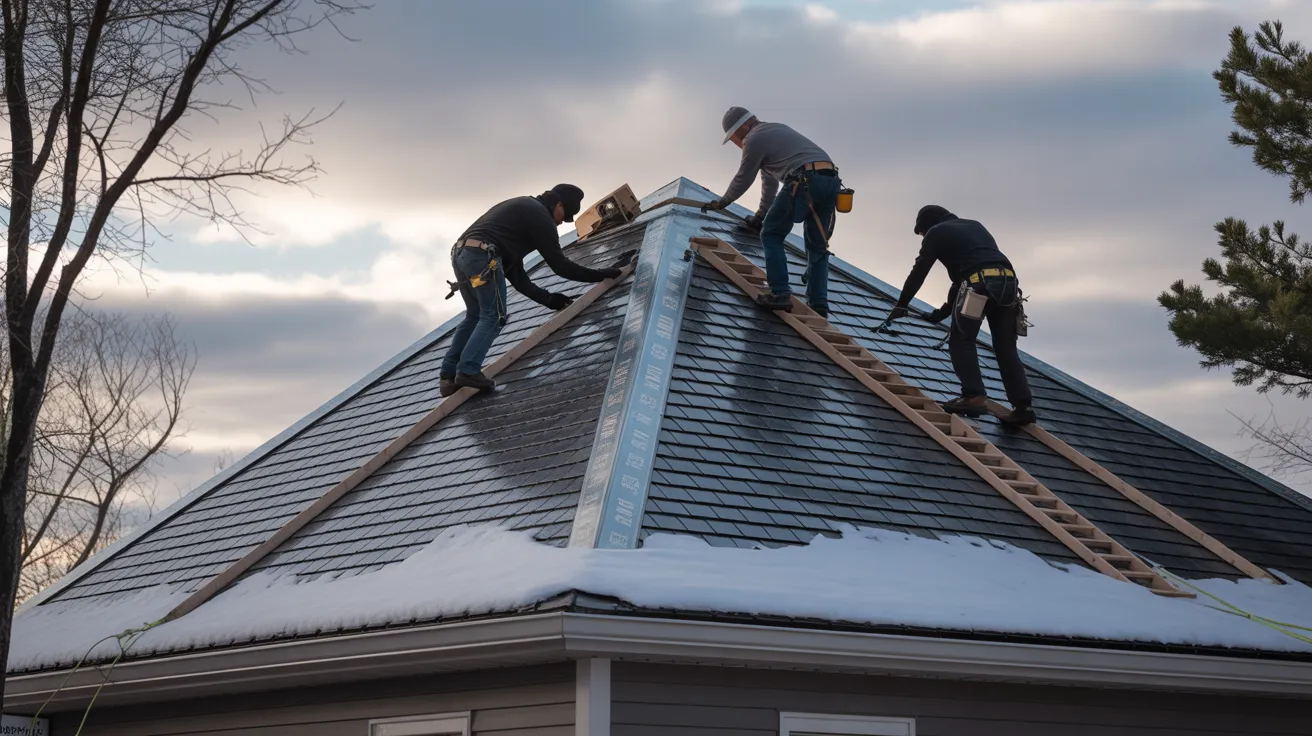
Your crews strictly adhere to detailed safety procedures on work locations: daily safety briefings, workplace safety analyses, and enforced PPE protocols-hard hats, CSA-approved boots, gloves, eye protection, and respirators as needed. You maintain fall protection protocols with guardrails, compliant anchors, lifelines, and 100% tie-off. You control access zones, safely store equipment, and keep work areas organized to prevent strikes and trips. Supervisors conduct continuous inspections, record safety adherence, and stop work for any deviation, ensuring worker and site safety.
Closing Remarks
Need a roof that stands up to Moncton's extreme weather and protect your investment? Consider this important fact: the NRCA shows that faulty installation causes up to 47% of unexpected roof failures-making professional expertise non-negotiable. Select experienced local crews, supplies tested for Atlantic weather conditions, and guarantees that back both workmanship and materials. Expect clear estimates, visually documented inspections, and upkeep schedules that extend service life. Assess contractors based on safety standards, ventilation systems, and emergency response time-so you're confident before the next storm arrives.